
In This Article, You’ll Learn: how laboratory cabinetry directly impacts operational flow, spatial efficiency, and long-term laboratory performance when decisions are made beyond aesthetics.
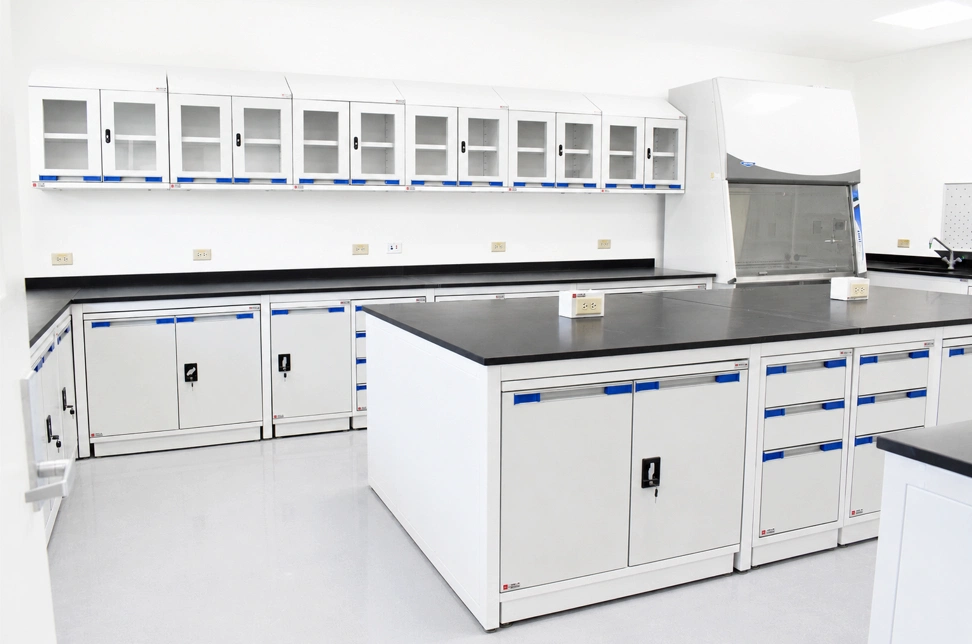
Laboratory environments are defined by movement, repetition, and precision. Every task follows a sequence, and every interruption has a measurable cost in time, accuracy, and safety. When workflows are poorly supported, even experienced teams compensate by adapting habits that reduce efficiency. This is where laboratory cabinetry becomes a strategic tool rather than a passive fixture. The way cabinetry is planned determines how materials are accessed, how instruments are staged, and how technicians transition between tasks. Optimising workflow is not about adding more storage, but about aligning spatial logic with daily laboratory behavior. When cabinetry supports predictable motion, reduces unnecessary steps, and maintains clear work zones, productivity becomes a built-in outcome rather than an ongoing struggle.
Cabinet systems define how a laboratory is navigated. They influence reach distances, visibility, and the sequencing of actions during experiments or routine processes. laboratory cabinetry designed with workflow in mind transforms static rooms into responsive environments that guide movement naturally.
• Workflow Zoning: Cabinet placement establishes clear zones for preparation, processing, and documentation, reducing cross-traffic and interruptions.
• Access Hierarchy: Frequently used tools are positioned at optimal heights and distances, eliminating repetitive bending, stretching, or searching.
• Task Continuity: Logical cabinet groupings allow technicians to complete multi-step procedures without relocating between stations.
By treating cabinetry as a framework rather than isolated units, laboratories achieve smoother transitions between tasks and reduce the friction that slows daily operations.
Efficient laboratories are not defined by size, but by how well space is utilised. laboratory cabinetry plays a decisive role in converting available square meters into functional capacity without overcrowding work areas.
• Vertical Optimisation: Tall cabinet configurations leverage unused vertical space while keeping benchtop areas clear for active work.
• Integrated Clearances: Proper depth and door swing planning prevent bottlenecks in narrow aisles or shared zones.
• Modular Scalability: Cabinet layouts can be reconfigured as workflows evolve, protecting the facility from premature obsolescence.
When space efficiency is engineered into cabinetry decisions, laboratories gain flexibility without compromising movement or safety.
Consistency is essential in laboratory operations, particularly when procedures must be replicated accurately over time. laboratory cabinetry contributes to this consistency by standardising how materials and tools are stored and accessed.
• Visual Predictability: Uniform cabinet layouts allow staff to locate items instinctively, reducing cognitive load during complex tasks.
• Process Alignment: Storage locations mirror procedural steps, reinforcing correct sequences through physical design.
• Error Reduction: Clearly defined storage zones minimise misplacement and accidental cross-use of materials.
Through consistent spatial logic, cabinetry becomes an extension of procedural discipline rather than a variable that staff must adapt to.
Laboratories rarely remain static. Research focus shifts, equipment changes, and team sizes fluctuate. laboratory cabinetry must anticipate this evolution to avoid costly redesigns.
• Reconfigurable Modules: Cabinets designed for adjustment allow layouts to change without structural disruption.
• Equipment Integration: Cabinet systems accommodate future instrumentation without compromising existing workflows.
• Lifecycle Planning: Durable construction and adaptable layouts extend operational relevance across multiple project phases.
Adaptable cabinetry ensures that workflow optimisation is not temporary, but sustained as laboratory needs evolve.
Workflow efficiency is rarely improved through isolated upgrades. It emerges when spatial design, daily behavior, and operational intent align. laboratory cabinets sits at the intersection of these factors, quietly shaping how work unfolds hour after hour. When cabinetry is planned as an active component of workflow, laboratories operate with fewer interruptions, clearer movement patterns, and greater long-term resilience.
No, laboratory cabinetry are not intended for the storage of hazardous chemicals, even when the cabinet materials themselves offer excellent chemical resistance. For chemical and hazardous material storage, Norlab offers a dedicated range of safety storage cabinets specifically engineered for that purpose, including flammable liquid storage cabinets, acid storage cabinets, and specialised sample storage solutions.
These products are designed to support laboratory safety, risk management, and compliance requirements that go beyond the capabilities of general laboratory cabinetry. If your project involves chemical storage, Norlab’s team can recommend the appropriate storage solution based on the substances being stored and the operational requirements of your facility.
Each certification addresses a different aspect of quality, performance, and compliance.
SEFA 8-PH, SEFA 8-M, and SEFA 8-W establish recognised performance requirements for laboratory cabinetry and casework, covering structural integrity, hardware durability, load-bearing performance, material resistance, and construction quality specific to professional laboratory environments.
ISO 9001 certifies the manufacturing quality management system. While it does not certify the laboratory cabinets themselves, it confirms that manufacturing processes follow documented and auditable quality-control procedures designed to maintain consistency across production.
AS/NZS standards provide guidance for laboratory design, safety, functionality, and operational performance within Australian and New Zealand laboratory environments.
During audits and compliance assessments, the documentation package provided by Norlab — including material certifications, dimensional specifications, and manufacturing standards — is typically reviewed to verify conformity with project requirements. Norlab includes this documentation as part of the standard project delivery process rather than offering it as an additional service.
Interior configuration is fully customisable and is one of the main reasons laboratories specify Norlab instead of relying on catalogue-standard cabinets. During the design phase, each project can be configured with custom drawer dimensions, drawer quantities per cabinet, adjustable shelf positions, internal dividers, lock configurations, and utility access provisions for plumbing, gas services, or electrical conduits.
The modular shelving system uses adjustable shelf supports, allowing storage layouts to be reconfigured after installation as workflow requirements evolve without tools or permanent modifications. Utility access provisions should be specified before manufacturing begins, as adding them after installation requires on-site modification that is more costly and produces a less refined result than factory-prepared openings.
If you share your workflow requirements and utility layout during the consultation process, Norlab’s team designs the cabinet interior configuration around how the laboratory actually operates.
The right material depends on your laboratory’s environment, cleaning protocols, and long-term operational budget. Each cabinet type is designed for a different level of chemical exposure, moisture resistance, and structural demand.
Phenolic laboratory cabinetry are the preferred specification when moisture resistance is the primary concern. They are commonly installed in microbiology laboratories, biosafety environments, and spaces with frequent aggressive disinfection using bleach solutions or isopropanol. In these environments, wood may degrade over time and metal can be more susceptible to long-term wear around exposed edges or joints.
Metal laboratory cabinetry are the standard for high-demand environments such as pharmaceutical manufacturing, industrial quality control laboratories, and government facilities. They offer exceptional structural durability and are often preferred in projects that require documented compliance with recognised laboratory standards.
Wood laboratory cabinetry are the most cost-effective option for dry environments with moderate cleaning requirements. They are commonly used in teaching laboratories, research facilities, and office-adjacent laboratory spaces where aesthetics matter and chemical exposure is limited to occasional surface contact.
If your laboratory contains areas with different exposure conditions — such as a dry storage zone and a wet bench area — Norlab commonly specifies different cabinet materials for different sections within the same project.
Laboratory cabinetry can be manufactured to match existing benchtop dimensions in the vast majority of cases. If your existing benchtops use non-standard dimensions, Norlab manufactures cabinets to your exact measurements rather than forcing a standard size that could create visible gaps, alignment issues, or installation complications.
The main situation where matching becomes difficult is when the existing benchtops are significantly warped or uneven. In those cases, a new cabinet system installed beneath a compromised benchtop may inherit the same alignment problems. Before manufacturing replacement laboratory cabinets, Norlab’s team evaluates the existing installation to identify any structural or levelling conditions that could affect the final fit and appearance.

Looking for a personalised quote on laboratory design or customised laboratory furniture?
We support your projects with fully managed design & manufacturing solutions, ensuring every detail aligns with your workflow, safety needs, and performance requirements.
 Expert guidance included — free 3D design
Our lab safety specialists review your project personally.
 Fully custom — material, dimensions, configuration & finish
Furniture designed around your lab’s workflow, space constraints, and compliance requirements.
 Australian owned & operated — nationwide delivery
Manufactured and supported from Victoria.