Container Laboratory

⭐⭐⭐⭐⭐ 4.7 / 5 | Google reviews for norlab.com.au

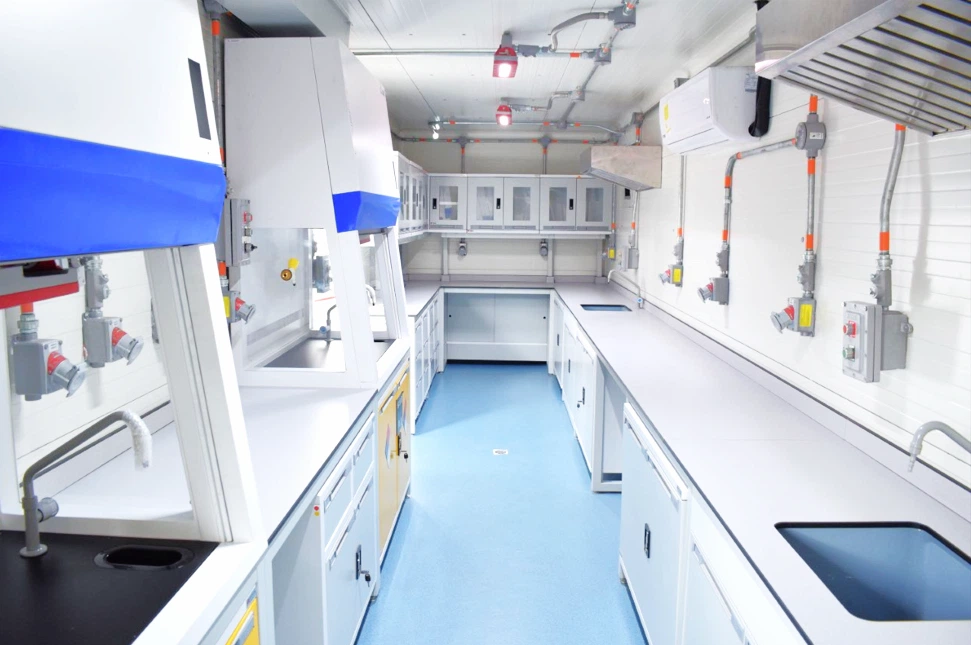
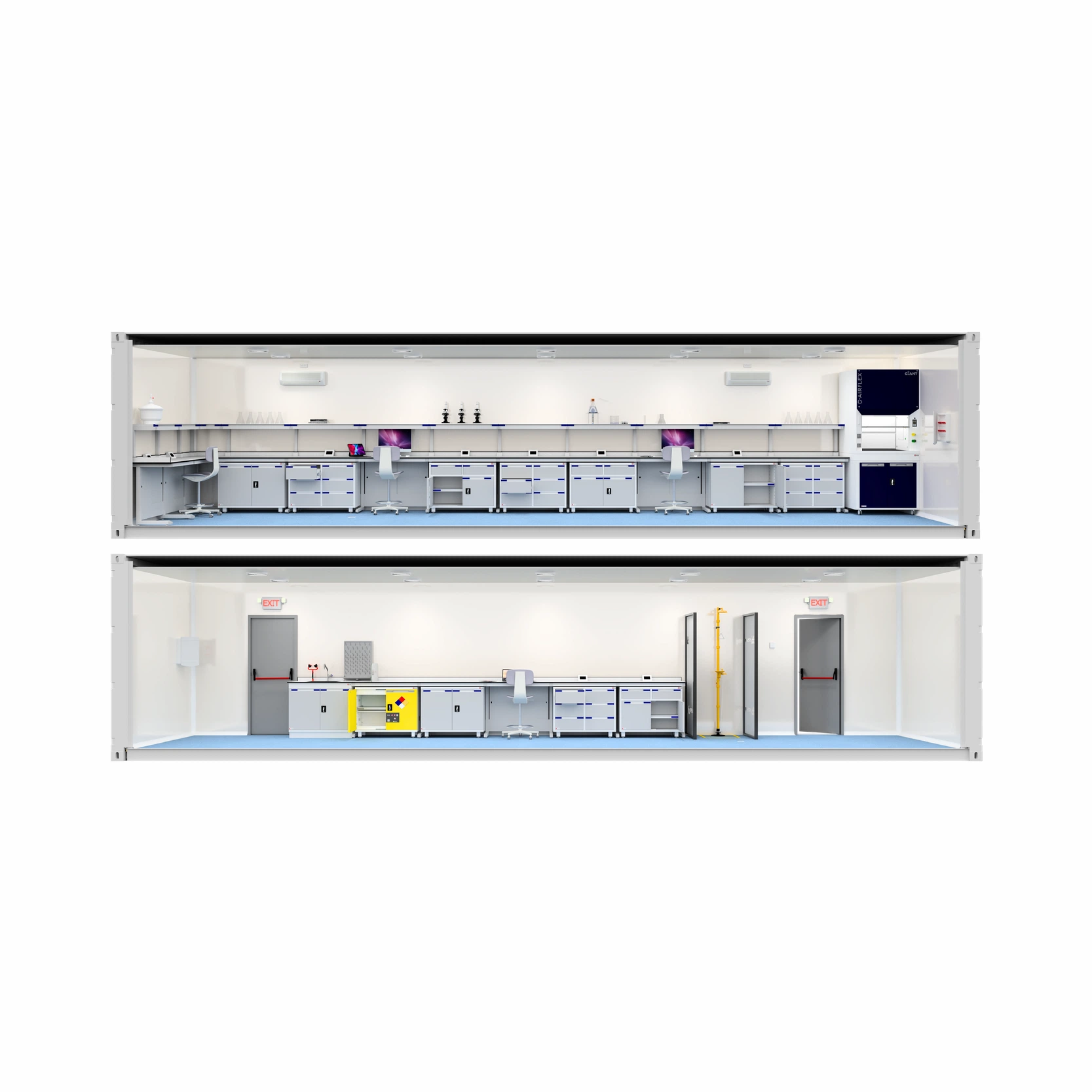
The Norlab Container Laboratories offer the highest level of operational readiness that your organisation requires for deploying a fully functional laboratory anywhere in Australia or Worldwide:

 Mobility
Our container laboratory is built to operate in remote, temporary, or rapidly deployed environments where permanent infrastructure is not available. Fully equipped with laboratory furniture and ready to function upon arrival.

 Customisation
Our container laboratory can be customised in interior layout, built-in equipment, utility connections, ventilation systems, and furniture features to match the specific scientific processes and operational requirements of your organisation.

• Compliance
Our container laboratory meets NCC 2022, AS/NZS 2982, and ISO 9001 standards, ensuring every unit meets the structural integrity, safety, and international transport requirements needed for global deployment and regulatory approval.

Container Laboratory Specifications

Thermal Insulation

Thermal Insulation

Plumbing Systems

Plumbing Systems

HVAC Systems

HVAC Systems

Fire Resistance

Fire Resistance

Abrasion Resistance

Abrasion Resistance​

Moisture Resistance

Moisture Resistance

Norlab container laboratory solutions are engineered using ISO-certified steel container structures and high-durability interior components, paired with chemical-resistant worksurfaces and laboratory-grade fixtures designed to withstand demanding field conditions. Fully integrated utilities including electrical systems, plumbing, ventilation, and built-in laboratory furniture are installed and tested before delivery. Every unit is manufactured under strict Australian quality standards and designed to provide a complete, self-contained laboratory environment, enabling your team to conduct precise, reliable scientific work from virtually any location.

Container Laboratory Comparison Table

Container Laboratory Container Laboratory Container Laboratory

Reference

Moblab Bunji (20 ft)

Moblab Yara (40 ft)

Moblab Warrigal (40 ft)

External Dimensions:
(Width × Depth × Height)

2.44  x 6.10 x 2.59 m

2.44 x 12.9 x 2.59 m

2.44 x 12.9 x 2.59 m

Interior Dimensions:
(Width × Depth × Height)

2.35 x 5.91 x 2.41 m

2.35 x 12.4 x 2.41 m

2.35 x 12.4 x 2.41 m

Load Capacity

25,000 kg

27,600 kg

27,600 kg

Product Certifications with Australian Standards

National Construction Code (NCC)
Australia’s national framework governing the design, construction, performance, and safety requirements of buildings and structures. Establishes provisions covering structural integrity, fire safety, accessibility, energy efficiency, building services, and occupant protection. For container laboratories, compliance with relevant NCC requirements helps ensure that modular laboratory facilities meet recognised Australian building performance standards and can be safely deployed across industrial, research, healthcare, educational, and commercial environments.

AS/NZS 2982
Australian and New Zealand standard for the design and construction of laboratory facilities. Establishes requirements and recommendations for laboratory planning, layouts, safety considerations, ventilation systems, service integration, material selection, workflow efficiency, and operational functionality. Provides guidance for creating safe, compliant, and efficient laboratory environments across research, healthcare, pharmaceutical, educational, industrial, and scientific applications. For container laboratories, AS/NZS 2982 serves as a key reference for laboratory design principles and facility performance requirements.

ISO 9001
International quality management standard published by the International Organisation for Standardisation (ISO). Establishes requirements for a documented Quality Management System (QMS) focused on consistent manufacturing processes, quality assurance, customer satisfaction, continuous improvement, and product traceability. For container laboratories, ISO 9001 certification demonstrates that manufacturing operations follow recognised quality management practices designed to ensure consistent construction quality, system reliability, operational performance, and compliance with customer and regulatory requirements across laboratory, healthcare, educational, pharmaceutical, and industrial applications.

Product Gallery

Success Stories

 Building a permanent laboratory would take 18 months and cost millions. Norlab’s container laboratory was installed in six weeks and it includes everything: countertops, cabinets, emergency shower, balance tables, fume hoods, chairs and air conditioning that maintains a constant 22°C despite external temperatures of 45°C. ⭐⭐⭐⭐⭐

 We needed a fully operational laboratory at a remote industrial site without the delays of traditional construction. Norlab delivered a complete 40 ft container laboratory that was ready for operation far sooner than we expected. The layout was practical, the finishes felt durable and professional, and the controlled environment allowed our team to work comfortably even in extreme outdoor conditions. The entire process, from design coordination to installation, was efficient and well managed. ⭐⭐⭐⭐⭐

Frequently Asked Questions

The container format supports a wider range of laboratory work than most people expect. Environmental testing and field sampling laboratories are the most common use case: water quality, soil analysis, and air monitoring, because they are often deployed at remote or temporary sites where permanent construction isn’t practical.

Quality control laboratories for manufacturing, food and beverage, medicinal cannabis, and pharmaceutical production are also a strong fit, particularly when a facility needs laboratory capacity quickly or in a location where expanding an existing building isn’t feasible. Research and development laboratories, mobile medical diagnostic units, and reference laboratories for government and defence applications have all been delivered in container format.

However, there are limits to what a container laboratory can support. Work requiring very large equipment footprints (such as mass spectrometry clusters or large-format autoclaves), high-containment biosafety levels (BSL-3 or BSL-4), or cleanroom environments stricter than ISO Class 7 generally require dedicated facility construction or significant additional engineering.

If you describe the specific assays, instruments, and throughput you need to support, Norlab can provide a direct answer on whether the container format is the right solution — or whether a conventional build would serve you better.

Steel containers have essentially no natural insulation and conduct heat and cold very efficiently, which makes HVAC design the most critical engineering component of a container laboratory. Norlab addresses this with closed-cell spray foam insulation applied to the interior walls, ceiling, and floor (R-values typically between R-20 and R-30 depending on specification), combined with a properly sized HVAC system matched to the container’s volume, the heat load from equipment, the local climate, and the number of occupants.

In hot climates such as remote mining regions and arid areas, systems are sized to handle peak ambient temperatures above 43°C while maintaining stable interior laboratory conditions. In cold climates, the insulation package and heating capacity are specified accordingly. Altitude also matters: HVAC equipment in locations above 1,524 metres requires derating for reduced air density, so the system is designed around the specific deployment site rather than a generic climate zone.

For laboratories requiring positive or negative pressure to meet contamination control or biosafety compliance, dedicated pressure management is built directly into the HVAC design. This ensures the container laboratory can operate reliably across a wide range of environmental conditions.

The regulatory framework depends on the type of laboratory activities being performed, not on the fact that the laboratory is housed within a container. Requirements may vary depending on whether the facility is used for environmental testing, research, quality control, healthcare, education, mining, or industrial applications.

What changes with the container laboratory format is the building and installation component. Depending on the deployment location, local council approvals, building permits, utility connections, and site-specific compliance requirements may apply. In some situations, container laboratories may be treated as relocatable or temporary structures, while in others they may be assessed under the same planning and building requirements as permanent facilities.

Norlab container laboratories are designed to support compliance with NCC 2022, AS/NZS 2982, and ISO 9001 requirements. Technical documentation, including structural specifications, electrical layouts, HVAC designs, and material certifications, can be provided to support the approval, installation, and inspection process where required.

The compliance pathway for each project depends on the intended laboratory activities, site conditions, and local regulatory requirements, which are reviewed during the design and specification phase to ensure the laboratory is configured appropriately for its intended use.

Yes, and that is one of the most significant advantages of the container laboratory format over conventional construction. The entire internal fit-out — cabinetry, benchtops, equipment mounts, plumbing, electrical systems, and HVAC — is designed to remain secure during transportation. Relocating the unit typically requires a crane and transport vehicle, while utility connections such as water, power, gas, and data can be disconnected and reconnected at the new location with minimal disruption.

The laboratory arrives at the new site essentially ready for reconnection and recommissioning. One important consideration is that any site-specific approvals, permits, or regulatory requirements associated with the original location may need to be reviewed or reapplied at the new site, as these requirements are generally linked to the installation location rather than the laboratory itself.

A container laboratory can often provide a more cost-effective alternative to conventional laboratory construction, particularly when deployment speed, site accessibility, and operational flexibility are important considerations. Savings are typically achieved through reduced construction works, shorter project timelines, and a streamlined delivery process where design, manufacturing, fit-out, and installation are managed as a single project.

Traditional laboratory construction often involves multiple contractors, extensive site works, approval processes, and construction programmes that may extend over many months. A container laboratory can be manufactured, delivered, and commissioned in a significantly shorter timeframe, allowing organisations to establish laboratory capability sooner and minimise operational delays.

For organisations operating in remote locations, temporary facilities, mining projects, infrastructure developments, research programmes, or site expansions, the value of a container laboratory extends beyond construction costs alone. Faster deployment and the ability to relocate the facility when operational requirements change can provide substantial long-term benefits.

Trust the Professionals.

+ 1000 Labs Manufactured & Installed in Australia and Worldwide.

Australia Map

Your fully operational lab — deployed anywhere in the world in weeks, at 40% less than conventional construction.

Tell us what your lab needs to do and where it needs to go — we’ll design the right container configuration, at no cost, no obligation.

🎯 Expert guidance included — free 3D design
Our lab safety specialists review your project personally.

✍🏼 Fully custom — layout, built-in equipment, HVAC, and utilities 
Every container laboratory is engineered around your specific scientific applications, site conditions, and environment.

📌 Australian owned & operated — nationwide delivery
Manufactured and supported from Victoria.