
In This Article, You’ll Learn: how the right surface choice defines durability, safety, and performance in lab benchtops, and which materials truly deliver long term value in demanding laboratory environments.
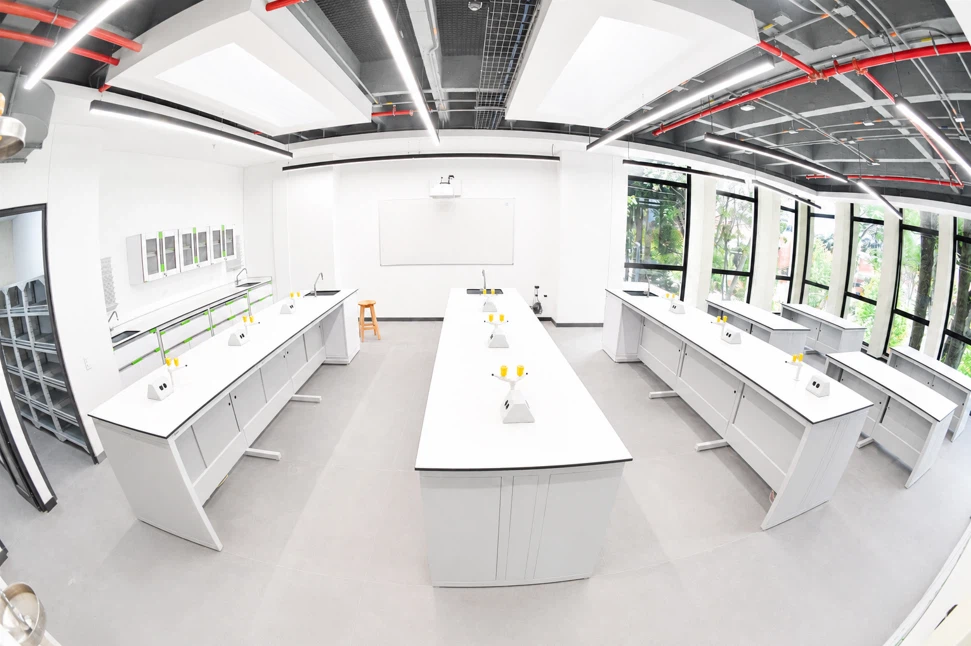
Selecting the correct laboratory benchtop surface is not simply a design preference; it directly influences durability, chemical resistance, hygiene standards, and the overall efficiency of daily laboratory operations. Every laboratory environment places different demands on its work surfaces, whether it involves exposure to corrosive chemicals, high temperatures, constant cleaning, or heavy equipment usage.
Understanding how different benchtop materials perform under real laboratory conditions allows facilities to create safer and more reliable working environments. Surface selection must consider the specific applications carried out within the laboratory, as well as the balance between functionality, maintenance, and longevity. This guide explores the most commonly used laboratory benchtop materials and explains how each option supports different operational requirements across professional laboratory settings.
Phenolic benchtops are designed for laboratories that require stable performance under daily chemical exposure, humidity, and repeated cleaning cycles. Their engineered composition delivers consistency across large work surfaces while controlling costs and maintenance demands.
• Chemical Tolerance for Routine Laboratory Use:
Phenolic surfaces withstand common laboratory reagents, cleaning agents, and disinfectants without surface degradation. This makes them suitable for teaching labs, diagnostics, and quality control environments where chemical exposure is frequent but controlled.
• Moisture Resistance and Dimensional Stability:
The non absorbent structure prevents swelling, warping, or delamination when exposed to water, spills, or high humidity. This ensures long term flatness and alignment of workstations.
• Smooth Surface for Efficient Cleaning:
Phenolic benchtops provide a sealed, smooth finish that reduces dirt retention and simplifies daily sanitation protocols, supporting consistent hygiene standards.
• Balanced Performance and Cost Efficiency:
These benchtops deliver dependable laboratory performance while remaining accessible for facilities managing multiple work areas or phased expansions.
Epoxy benchtops are specified when laboratories operate under extreme chemical, thermal, or mechanical stress. Their solid composition offers maximum safety margins in high risk environments.
• Exceptional Chemical Resistance:
Epoxy surfaces resist strong acids, solvents, and corrosive substances without staining or surface breakdown, making them ideal for research, pharmaceutical, and industrial laboratories.
• High Temperature and Thermal Shock Resistance:
These benchtops tolerate elevated temperatures and rapid temperature changes, protecting the surface during heating processes and equipment operation.
• Non Porous Structure for Contamination Control:
The seamless material prevents chemical absorption and microbial penetration, supporting sterile workflows and reducing cross contamination risks.
• Load Bearing Strength for Heavy Equipment:
Epoxy benchtops maintain structural integrity under heavy instruments, vibration, and continuous use, ensuring long service life.
Acrylic benchtops are selected for laboratories where visual control, cleanliness, and controlled chemical exposure are priorities. Their refined surface supports precision oriented environments.
• High Hygiene Performance:
The smooth, non porous acrylic surface simplifies cleaning and minimizes microbial retention, supporting medical and diagnostic applications.
• Visual Clarity and Surface Uniformity:
Acrylic materials offer a clean, consistent appearance that enhances inspection accuracy and workspace organization.
• Resistance to Mild Chemicals and Disinfectants:
These benchtops perform reliably under routine laboratory chemicals and cleaning solutions used in controlled environments.
• Lightweight Construction for Flexible Layouts:
Acrylic benchtops support modular laboratory designs where adaptability and ease of installation are essential.
Ceramic benchtops are engineered for laboratories exposed to extreme heat, abrasion, and chemically aggressive processes. Their performance remains stable where other materials fail.
• Outstanding Heat Resistance:
Ceramic surfaces tolerate direct flame exposure and sustained high temperatures without deformation, cracking, or surface damage.
• Superior Chemical and Abrasion Resistance:
The fired ceramic structure resists aggressive chemicals, scratches, and mechanical wear, ensuring durability in demanding environments.
• Inert and Non Reactive Surface:
Ceramic benchtops do not interact with chemicals or samples, preserving test accuracy and process integrity.
• Long Term Performance in Specialized Laboratories:
Although heavier and more rigid, ceramic benches provide unmatched longevity for analytical, metallurgy, and high temperature testing laboratories.
Choosing the right surface material for lab benchtops is a strategic decision that directly impacts safety, performance, and long term operational efficiency. phenolic, epoxy, acrylic, and ceramic surfaces each serve distinct laboratory demands, from routine workflows to extreme chemical and thermal exposure. By aligning lab benchtop materials with real application requirements, laboratories reduce risk, extend service life, and create work environments that support precision, compliance, and uninterrupted scientific progress.
Choosing the right lab benchtops depends mainly on the chemicals used in your laboratory and the level of heat exposure your surfaces will handle. Phenolic is the most cost-effective option and performs well with diluted acids, bases, and most organic solvents, making it a common choice for educational and general research laboratories. Epoxy is preferred for environments working with concentrated acids, aggressive solvents, or open flames because it offers excellent heat and chemical resistance.
Acrylic surfaces are commonly selected for medical, pharmaceutical, and food science environments where hygiene and appearance are prioritised over aggressive chemical resistance. Ceramic is the preferred choice for high-temperature applications involving Bunsen burners or direct heating equipment due to its exceptional heat resistance. If you’re unsure which option best suits your workflow, Norlab can recommend the right laboratory benchtops solution based on your chemicals, laboratory type, and daily operations.
Every order of lab benchtops from Norlab is fully custom manufactured to match your exact specifications — there are no fixed standard sizes. Panel dimensions, thicknesses, edge profiles, and overall shapes are tailored to your layout, whether your benches include angled corners, non-standard depths, or custom overhang requirements.
Many buyers worry they’ll receive generic panels that don’t properly fit their space, but Norlab designs every project around the actual room dimensions and workflow requirements. To get started, you simply provide a floor plan or room measurements, and the design team handles the fabrication drawings and complimentary 3D modelling for your laboratory benchtops project.
All required cut-outs are included during the fabrication process for Norlab lab benchtops, so there is no need to engage a separate contractor after delivery. Openings for sinks, taps, reagent dispensers, gas service fittings, and electrical grommets are coordinated during the design review stage using your fixture and plumbing specifications.
This process is important because cut-out placement directly affects the structural integrity of the surface, especially with epoxy and phenolic materials. Cutting openings on-site can compromise durability and long-term performance, which is why all modifications are engineered before production begins. By integrating these details during fabrication, Norlab ensures your laboratory benchtops arrive installation-ready and properly configured for your laboratory layout.
Norlab lab benchtops are available with three structural frame configurations: Frame Type C, which features an open front commonly used with cabinetry underneath; Frame Type U, designed for island benches and peninsula layouts; and Frame Type O, a fully enclosed perimeter frame specified for heavy equipment or vibration-sensitive applications.
Frame selection is based entirely on the structural and layout needs of your laboratory, not on the benchtop material itself. Any surface option — including phenolic, epoxy, acrylic, or ceramic — can be paired with any frame configuration. This flexibility allows Norlab to design laboratory benchtop systems that match both the functional requirements and workflow demands of your facility.
Yes, All lab benchtops manufactured by Norlab comply with SEFA standards, which establish performance requirements for laboratory work surfaces including chemical resistance, structural load capacity, durability, and surface flatness tolerances.
SEFA compliance is especially important for facilities operating under regulated quality and compliance frameworks because work surface specifications are often reviewed as part of laboratory design, quality assurance, and facility validation processes. Norlab includes all required compliance documentation as part of the project delivery rather than treating it as an optional add-on. If your facility requires additional certifications or specialised standards, those requirements can also be incorporated into the final laboratory benchtop specification during the design phase.

Looking for a personalised quote on laboratory design or customised laboratory furniture?
We support your projects with fully managed design & manufacturing solutions, ensuring every detail aligns with your workflow, safety needs, and performance requirements.
 Expert guidance included — free 3D design
Our lab safety specialists review your project personally.
 Fully custom — material, dimensions, configuration & finish
Furniture designed around your lab’s workflow, space constraints, and compliance requirements.
 Australian owned & operated — nationwide delivery
Manufactured and supported from Victoria.