
In This Article, You’ll Learn: how laboratory labelling reduces cognitive load by structuring visual information, guiding attention, standardising recognition patterns, and supporting faster, safer decisions inside laboratories where mental demand is continuous and mistakes carry operational consequences.
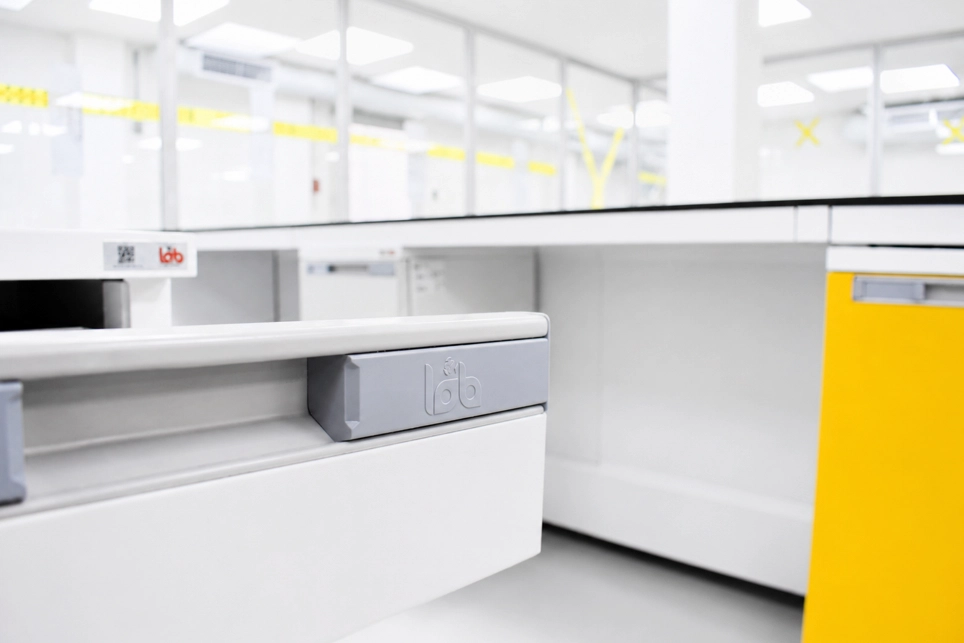
Laboratory environments demand constant interpretation of visual information. Technicians must identify materials, confirm conditions, and execute procedures while maintaining concentration over long periods. When information is unclear or inconsistently presented, the brain is forced to slow down and consciously interpret details that should be immediate.
This creates friction that accumulates silently throughout the day. laboratory labelling directly influences whether actions are performed instinctively or require deliberate thought. Labels are not passive identifiers; they are cognitive interfaces between people and their environment. When labelling systems are poorly designed, workers compensate with memory, assumptions, and repeated checking. Over time, this increases fatigue and error probability.
Laboratory labelling directly affects how attention is allocated in visually dense laboratory environments. Technicians continuously scan shelves, benches, equipment interfaces, and shared work zones while performing tasks that demand accuracy and speed. When labels are inconsistent, poorly structured, or visually cluttered, the brain is forced to actively read and interpret each element. This increases cognitive load and slows reaction time. Well designed labelling systems reduce this effort by creating predictable visual patterns that the brain can process almost automatically. Over time, this predictability reduces mental fatigue, improves focus, and supports faster recognition during repetitive or time sensitive tasks where attention naturally degrades.
• Visual Hierarchy Control: Clear prioritisation ensures that the most critical information is perceived immediately, without scanning entire labels or surrounding areas.
• Pattern Recognition Support: Repeated formats, positions, and layouts allow users to recognise meaning instantly rather than reinterpret structure each time.
• Visual Fatigue Reduction: Balanced spacing, contrast, and alignment reduce eye strain during long shifts and high volume workflows.
When attention is guided by design instead of conscious effort, mental resources are preserved for analytical thinking and procedural accuracy rather than environmental navigation.
Errors in laboratories frequently originate from cognitive overload rather than lack of training or competence. laboratory labelling reduces this risk by minimising the mental effort required to interpret conditions, contents, and restrictions during execution. Ambiguous labels force users to rely on memory, assumptions, or prior experience, which become unreliable under pressure or fatigue. Clear labelling functions as an external cognitive aid, supporting correct decisions even when attention is divided. This role is especially critical during routine tasks, where familiarity increases the risk of complacency and automatic behavior without verification.
• Immediate Meaning Clarity: Direct language and unambiguous terminology reduce hesitation at the point of action.
• Decision Point Placement: Labels positioned exactly where decisions occur prevent unnecessary verification, backtracking, or cross checking.
• Information Discipline Enforcement: Removing irrelevant or secondary data ensures warnings and instructions remain visible and dominant.
By lowering cognitive demand, labelling systems reduce error probability without adding procedural steps or slowing operations.
Workflow efficiency depends heavily on uninterrupted mental flow. laboratory labelling supports this flow by eliminating micro interruptions caused by uncertainty, confirmation checks, or reinterpretation. Each pause to verify information breaks concentration and forces the brain to reorient to the task. Across hundreds of actions per day, these interruptions accumulate, reducing productivity and increasing mental fatigue. Consistent labelling allows work to proceed smoothly by reinforcing predictable decision patterns, movement sequences, and task transitions throughout the laboratory environment.
• Predictable Visual Structure: Familiar layouts allow instant orientation even during high workload periods or time pressure.
• Sightline Alignment: Labels placed within natural viewing angles prevent task disruption and unnecessary movement.
• Context Relevant Information: Presenting only what is needed at the moment avoids overwhelming users during active tasks.
Maintaining workflow continuity through labelling enables laboratories to operate efficiently without constant cognitive resets.
Laboratories evolve as teams change, equipment is upgraded, and procedures adapt. laboratory labelling provides long term stability by preserving visual logic despite these operational changes. Stable labelling systems reduce the need for retraining and protect institutional knowledge embedded in the physical environment. When visual rules remain consistent, cognitive load stays predictable, allowing both new and experienced staff to operate confidently without reinterpreting their surroundings or relearning basic navigation cues.
• Visual Standardisation Over Time: Consistent colors, symbols, and typography reinforce recognition across years of use.
• Scalable System Design: Labelling frameworks designed to expand prevent fragmentation as the laboratory grows.
• Training Reinforcement Through Environment: Visual cues support learning without increasing instructional burden.
Long term cognitive stability ensures that operational change does not introduce new mental strain.
Cognitive load is an invisible factor shaping laboratory performance every day. Laboratory Labelling determines whether information is processed automatically or requires constant mental effort. When labelling systems are designed around human cognition, laboratories operate with greater speed, fewer errors, and sustained clarity even under pressure.
Laboratory labelling is essential for helping personnel quickly identify chemicals, samples, equipment and storage locations. Clear and consistent labels reduce the time spent searching for materials and minimise the risk of errors caused by misidentification. In busy laboratory environments, effective labelling systems support faster decision-making, improve workflow efficiency and help maintain organised workspaces where critical information can be accessed immediately when needed.
Cognitive load refers to the amount of mental effort required to process information and make decisions. Poor laboratory labelling forces personnel to spend additional time interpreting unclear information, locating materials or verifying contents, which increases mental fatigue and the likelihood of mistakes. A well-structured labelling system allows laboratory staff to identify information quickly and confidently, reducing unnecessary mental effort and enabling greater focus on analytical tasks, quality control procedures and research activities.
Some of the most common laboratory labelling issues include inconsistent naming conventions, faded or damaged labels, missing hazard information and labels that are difficult to read from normal working distances. These problems can create confusion, slow workflows and increase the risk of sample mix-ups or incorrect chemical handling. Establishing standardised labelling procedures helps laboratories maintain consistency, improve traceability and support safer day-to-day operations.
Laboratory labels should be reviewed regularly to ensure information remains accurate, legible and relevant. Labels may require updating when chemicals are relocated, storage layouts change, new equipment is introduced or laboratory procedures are modified. Routine inspections help identify damaged or outdated labels before they contribute to operational errors, compliance issues or unnecessary inefficiencies within the laboratory.
Several organisations provide guidance on laboratory labelling, hazard communication and workplace identification systems. The Safe Work Australia publishes information on chemical labelling and hazardous substance management, while the Globally Harmonized System of Classification and Labelling of Chemicals (GHS) establishes internationally recognised labelling standards for hazardous chemicals.
Laboratories can also refer to Standards Australia and relevant workplace safety guidance to develop labelling systems that improve communication, reduce cognitive load and support safer laboratory operations.

Looking for a personalised quote on laboratory design or customised laboratory furniture?
We support your projects with fully managed design & manufacturing solutions, ensuring every detail aligns with your workflow, safety needs, and performance requirements.
 Expert guidance included — free 3D design
Our lab safety specialists review your project personally.
 Fully custom — material, dimensions, configuration & finish
Furniture designed around your lab’s workflow, space constraints, and compliance requirements.
 Australian owned & operated — nationwide delivery
Manufactured and supported from Victoria.