
In This Article, You’ll Learn: how safety showers ensure regulatory compliance in Australian laboratories, the importance of AS 4775 standards, and how to effectively integrate emergency stations into your facility.
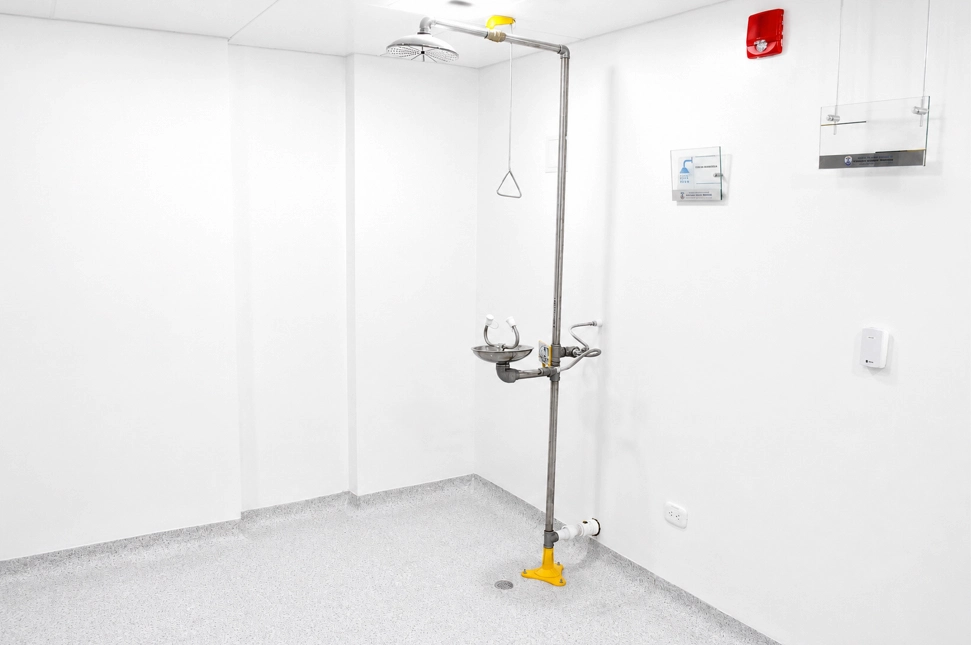
The safety of personnel is the most significant responsibility of any facility manager. When working with hazardous substances, the first few seconds following a chemical exposure are critical to preventing injury. In Australia, the legal framework is stringent, requiring that decontamination facilities are always accessible. This makes the installation of reliable safety showers a cornerstone of responsible laboratory design.
Integrating these units into your floor plan requires a strategic understanding of risk zones. Unlike standard laboratory furniture, emergency equipment must remain unobstructed. By prioritising high-performance systems, you are fostering a culture of safety. Robust units ensure that every staff member has a clear path to safety during a chemical incident.
In Australia, the primary standard for decontamination equipment is AS 4775. This regulation specifies the flow rate and spray pattern required to flush chemicals from the skin. When purchasing safety showers, it is vital to verify that the equipment meets these metrics to ensure your facility remains audit-ready and safe.
• Consistent Flow Rates: Compliance requires a continuous flow of tepid water for fifteen minutes for thorough decontamination.
• Hands-Free Operation: Emergency units must feature stay-open valves so users can keep their eyes open during a crisis.
• Highly Visible Signage: Australian standards mandate clear, compliant safety signs that are easily identifiable.
Choosing equipment that adheres to national standards guarantees that your laboratory furniture provides protection. High-quality systems are critical insurance policies against accidents. The presence of safety showers is a non-negotiable requirement for any modern lab.
A safety strategy involves more than an overhead shower. Chemical splashes frequently affect the eyes, necessitating a specialised response. Combining your equipment with eye washer stations creates a centralised decontamination hub. This approach ensures the solution is always in a known location for the injured person.
• Dual-Stream Technology: Modern eye washes provide a soft flow that flushes the eyes without causing further damage.
• Ergonomic Accessibility: Stations must be positioned at a height that allows the user to lean over comfortably.
• Dust Covers: High-quality units feature protective caps that keep spray heads clean from laboratory dust.
When you source furniture and safety systems from a specialised provider, components work together. Integrating an eye washer into the shower saves space while doubling protection. Advanced safety showers provide this necessary layer of redundancy for hazardous environments.
The effectiveness of emergency equipment is dependent on its location. Australian guidelines state units must be reachable within ten seconds of a hazard. If your laboratory furniture is poorly arranged, it could create barriers that delay treatment. Strategically placed safety showers are essential for maintaining a compliant workspace.
• Path of Least Resistance: The route to the emergency station must be a straight line, free of equipment or stools.
• Proximity to High-Risk Zones: Units should be placed near areas where corrosives or flammables are handled.
• Non-Slip Flooring: The area surrounding the shower must handle water volume without creating a slip hazard.
A well-planned layout considers these safety zones as anchor points. By designing the workspace around these nodes, you ensure safety is built into the workflow. Certified units act as the final line of defence. Effective safety showers are vital for operational integrity.
To maintain compliance with Australian laws, equipment must undergo regular verification. It is not enough to install the unit; it must be functional every second. Weekly activation tests ensure lines are clear of sediment and water flows at the required pressure. Reliable safety showers must be part of a maintenance schedule.
• Weekly Activation: Running the unit briefly flushes stagnant water and confirms mechanical valves operate smoothly.
• Annual Audits: A yearly inspection verifies that flow patterns and temperatures meet AS 4775 requirements.
• Staff Training: Personnel must be familiar with how to operate the equipment for the full flush duration.
Investing in durable units simplifies this process. When equipment is built to last, it remains reliable for years, providing peace of mind. Consistent testing of your safety showers is the final step in a response plan.
Achieving emergency compliance requires the integration of certified safety showers into a well-designed laboratory furniture plan, ensuring rapid decontamination and adherence to Australian standards.
The number of safety showers required depends on laboratory size, the number of hazard zones, and the 10-second travel distance rule (approximately 55 feet / 17 metres of unobstructed path). Every area where personnel handle corrosive, toxic, or irritating chemicals must have safety showers accessible within that distance.
Additionally, there must be no obstructions (doors, stairs, turns) that would delay access. Norlab laboratory design team reviews your facility layout, chemical inventory, and workflow patterns to determine the minimum number of safety showers needed for full ANSI/OSHA compliance.
Safety showers are available in three primary materials: galvanised steel (cost-effective for general laboratory use), stainless steel (superior corrosion resistance for chemical-intensive environments), and ABS plastic (lightweight, corrosion-proof for moderate-use areas).
For laboratories handling strong acids, bases, or salt solutions, stainless steel 304 or 316 grade is recommended because it resists pitting and stress corrosion that would degrade galvanised coatings over time. Norlab offers safety showers in all three materials and can recommend the optimal construction based on your laboratory’s specific chemical exposure profile.
In a chemical exposure incident, seconds matter. The effectiveness of safety showers depends largely on how quickly an affected person can reach them. If an employee has to navigate around benches, equipment or storage systems, valuable time may be lost while hazardous substances continue to damage skin and clothing.
This is why safety showers location should be considered during the laboratory design stage rather than added as an afterthought. Clear access pathways, visible signage and unobstructed operation are essential factors that can directly influence emergency outcomes.
AS 4775 requires weekly activation testing of safety showers to flush stagnant water from the supply lines and verify proper operation. Additionally, a comprehensive annual inspection must verify flow rate, water temperature, activation mechanism function, signage visibility, and unobstructed access path.
Many facilities also conduct monthly visual inspections of corrosion, leaks, and drainage. Norlab provides inspection checklists and maintenance schedules with every safety showers installation to help laboratory managers maintain a documented compliance record.
With proper maintenance, safety showers from Norlab have an expected structural lifespan of 20–30 years for the shower body, pipe connections, and mounting hardware.
Components that require periodic replacement include: valve seals and O-rings (every 3–5 years depending on water quality), pull-chain or push-plate activation mechanisms (every 5–10 years), and shower heads/eyewash nozzles (if mineral buildup becomes excessive despite regular flushing). The stainless steel and galvanised steel bodies resist environmental degradation throughout the unit’s service life.

Looking for a personalised quote on laboratory design or customised laboratory furniture?
We support your projects with fully managed design & manufacturing solutions, ensuring every detail aligns with your workflow, safety needs, and performance requirements.
 Expert guidance included — free 3D design
Our lab safety specialists review your project personally.
 Fully custom — material, dimensions, configuration & finish
Furniture designed around your lab’s workflow, space constraints, and compliance requirements.
 Australian owned & operated — nationwide delivery
Manufactured and supported from Victoria.